

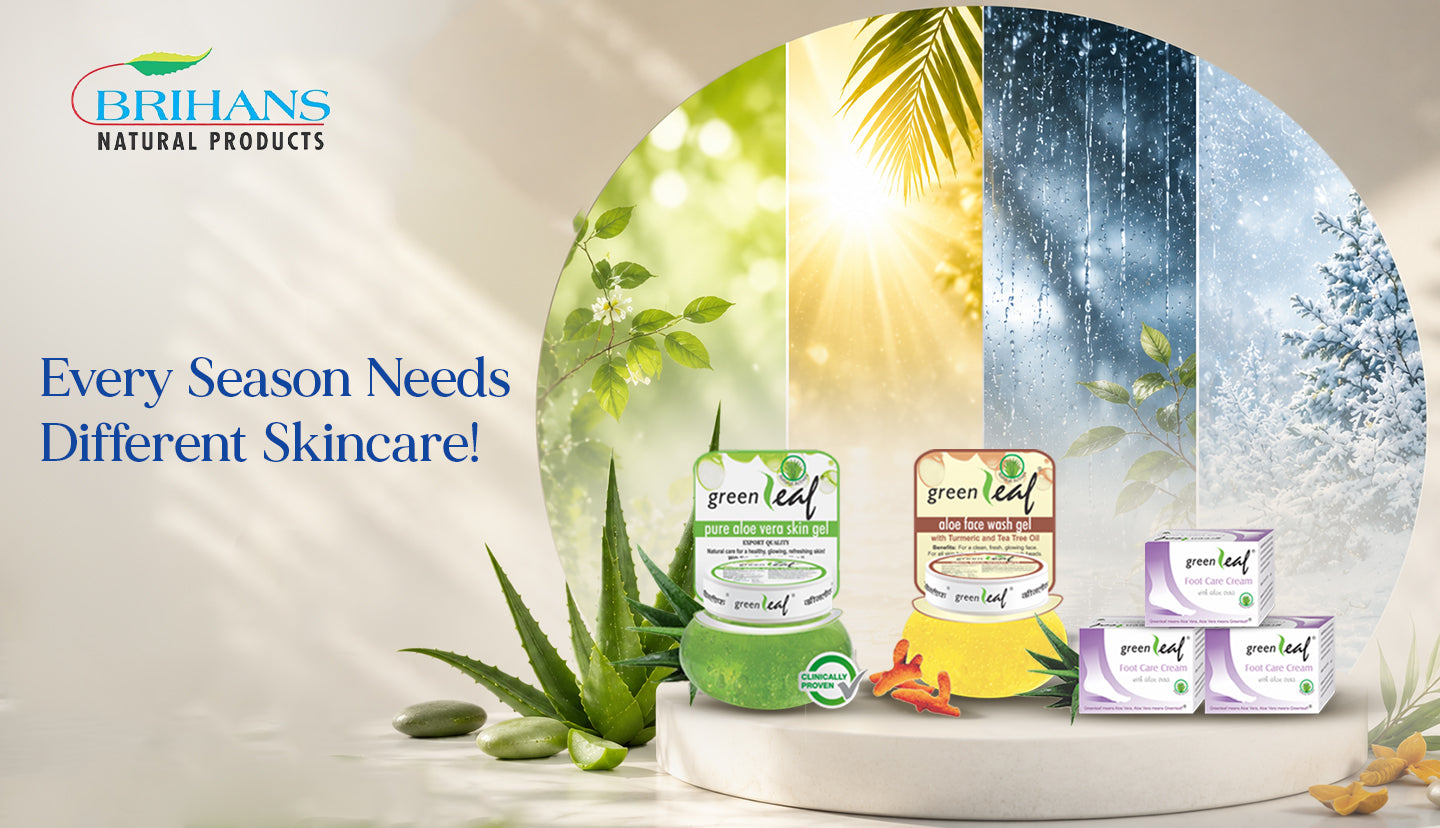
Your skin can feel perfectly balanced one month and completely different the next. A face wash that worked well through winter may suddenly leave your skin feeling heavy in summer. A lightweight moisturiser that felt just right in April may not offer enough comfort once the colder months arrive.
It is easy to assume your skin type has changed. More often than not, it is simply responding to the weather around you.
In India, the climate shifts noticeably every few months or even days. Heat, humidity, cooler temperatures and changing pollution levels all influence how your skin behaves. A few thoughtful adjustments each season can make all the difference.

Why Does Your Skin Change With The Seasons?
Skin is constantly adapting. It reacts to the temperature outside, the amount of moisture in the air, the intensity of the sun and even the time you spend in air-conditioned spaces. These changes affect the skin barrier, which is responsible for keeping moisture in and external irritants out.
As summer settles in, the skin produces more sweat and dehydration. The monsoon brings high humidity, leaving many people dealing with congestion and excess oily shine. Winter tells a different story. Lower humidity and cooler air gradually reduce the skin's moisture levels, making dryness and rough patches more noticeable.
These seasonal shifts are completely natural. Instead of expecting your skin to behave the same way all year, it makes more sense to give it what it needs at that particular time.
Summer Calls For Lightweight Hydration
There is no escaping an Indian summer. Long hours in the sun, rising temperatures and constant perspiration can leave the skin feeling sticky and dehydrated by the middle of the day. Washing your face repeatedly might seem like the quickest solution. But it often removes moisture that the skin still needs. A lighter approach usually works better.
Begin with a gentle soap free cleanser that lifts away sweat, excess oil and the dust collected through the day. Ingredients such as Aloe Vera, turmeric and tea tree oil cleanse the skin while leaving it feeling fresh rather than stripped.
Follow this with an aloe vera skin gel. It absorbs quickly, delivers lightweight hydration and leaves behind a calming sensation that feels particularly welcome after spending time outdoors. Hydrated skin remains comfortable even when the weather is at its hottest.
Monsoon Skincare Is All About Balance
The arrival of the rain often changes the way skin feels almost overnight. Humidity rises, oil production increases and impurities settle more easily on the skin. This is also the season when many people start cleansing more frequently, hoping to prevent breakouts. Skin rarely benefits from that approach.
Over-cleansing can disturb the skin's natural barrier, making it harder to maintain a healthy balance. A gentle soap free face wash used twice a day is usually enough to remove dirt, excess oil and pollutants without causing unnecessary dryness.
Balanced hydration has an important role to play, even when the skin feels oily. Applying an Aloe Cucumber gel after cleansing helps replenish moisture while keeping the skin feeling light and refreshed. Together with simple habits such as changing out of damp clothing and cleansing after getting caught in the rain, these small steps can help the skin feel more settled throughout the season. Monsoon also brings along cracked heels and dry feet due to the wet roads and walking in rain water. Caring for your feet with an ayurvedic foot care cream will keep your feet protected through the rainy season.
Winter Is The Season For Moisture Lock
Winter often arrives quietly, but the skin notices the difference almost immediately. Cooler air and lower humidity allow moisture to escape more easily, leaving the skin feeling tight after cleansing. Dry patches around the elbows, knees and feet also become more common during this time.
This is when richer hydration earns its place in your routine. Avoid using harsh soaps in winter and opt for a moisturising aloe bodywash with honey and green tea.
Applying a nourishing body lotion after a shower helps seal in moisture while the skin is still slightly damp. Areas that naturally lose moisture more quickly, particularly the feet, benefit from dedicated foot care cream with ingredients such as kokum butter and Aloe Vera.
Your face & body deserve consistent moisturisation during winter. Cleansing with a gentle soap free face wash and following it with an aloe body lotion keeps your skin moisturised and soft. This simple approach keeps the skin feeling comfortable without making the routine unnecessarily complicated.
The Right Ingredients Make Every Season Easier
Changing your routine every few months does not mean replacing every product on your shelf. It often comes down to choosing ingredients that work with your skin throughout the year.
Aloe Vera remains one of the most versatile ingredients for everyday skincare. It delivers hydration without feeling heavy. It also offers a naturally soothing feel after sun exposure and fits comfortably into routines for every season. Turmeric helps heal the skin; cucumber supports oily complexions and leaves the skin feeling refreshed. During colder months, Almond oil and Honey work as natural moisturisers and kokum butter provides the extra nourishment that dry skin often needs.
Selecting skincare products with thoughtfully chosen natural active ingredients makes seasonal adjustments much easier.
A Simple Skincare Routine For Every Season
Healthy skin is rarely the result of a complicated routine. Paying attention to seasonal changes and responding with small, consistent adjustments often proves far more effective. Greenleaf aloe vera skincare range by Brihans Natural Products has all the right products to take you through every season.
In summer, focus on gentle cleansing and lightweight hydration. During the monsoon, keep the skin clean and oil-free while maintaining moisture. As winter arrives, introduce richer moisturisation for both the face and body without losing a gentle cleansing routine.
Your skin changes because its surroundings change. Once you recognise that pattern, adapting your skincare routine becomes much simpler. Choosing suitable skincare products for each season allows your skin to stay comfortable, healthy and well-cared for, whatever the weather brings.
FAQs
1. Why does my skin suddenly become oily even though I have dry skin?
The weather can change your skin. In warm, humid months, your skin naturally produces more oil. This can happen even if you're prone to dry skin. That doesn’t mean your skin type has changed. Adjusting your skincare routine to include gentle cleansing and lightweight hydration can help keep your skin balanced.
2. Should I use the same skincare products throughout the year?
All season natural ingredients like Aloe vera can remain the same but the form of the skincare products can change. In summer, your skin requires light water based gel products. Winter often needs richer moisturisers in lotion and cream forms to prevent dryness. A soap free cleanser works better to keep away dryness. Rather than using the exact same skincare products all year round, it is better to change things up according to what your skin needs each season.
3. Why does my skin feel dry even during the rainy season?
Many people think humidity keeps the skin hydrated, but that is not always true. Air conditioning, cooler weather, pollution, frequent face washing and spending time indoors make your skin lose moisture. Even during the monsoon, your skin needs hydration. Mixing a lightweight gel and lotion can help reduce monsoon dryness and make the skin soft without making it feel greasy.
4. How do I know if my skincare routine needs to change?
Your skin usually gives clear signs. If it suddenly feels very oily, tight, flaky, itchy or starts breaking out more than usual, your current routine may not suit the weather anymore. You do not have to replace every product. Small changes, such as using a lighter moisturising gel in summer or adding extra hydration in winter, are often enough to keep your skin comfortable.